
Dental Patient Experience: Systems-Led Guide for 2026

What if the biggest patient experience problem isn’t one bad interaction, but the gaps between them? A patient books an appointment, waits for a response, completes intake, arrives at the office, and then needs clear follow-up. When those handoffs are inconsistent, adding another tool may only add work. Patient experience optimization dental teams can sustain starts by making the whole journey work as one operating system.
Patients expect timely communication and a smooth visit. Front-desk teams need room for meaningful conversations, not an endless queue of administrative tasks. Practice owners need to see whether improvements are making a difference. Those goals are connected, and they’re easier to manage when the process is designed as a system.
This guide shows you how to identify friction from booking through follow-up, prioritize practical changes that fit your staffing and systems, and track the results alongside operational and business indicators. You’ll also see how coordinated scheduling, patient communication, and support for treatment conversations can improve consistency without creating a patchwork of disconnected fixes.
Key Takeaways
- Map the patient journey from first inquiry through follow-up to find delays, repeated questions, and unclear handoffs.
- Use patient feedback, missed-call patterns, scheduling delays, and team observations to identify causes before choosing a fix.
- Effective patient experience optimization aligns ownership and workflows across marketing, front desk, clinical teams, and follow-up.
- Prioritize improvements based on their impact and fit with current staffing, systems, and practice priorities, then review the results.
- Consulting, virtual staffing, and call center support can reinforce consistent communication, but new software alone won’t fix a broken process.
Dental Patient Experience Optimization Starts by Finding Friction
Patient experience optimization means improving interactions across the care journey, not simply refreshing the office or upgrading software. Trace what happens from the first inquiry through scheduling, arrival, care conversations, payment, and follow-up. Patient experience is broader than satisfaction with one visit. Satisfaction is an important signal, while the experience also reflects how reliably the practice delivers each step.
That distinction matters in daily operations. A patient may appreciate a friendly team member and still face a confusing intake process or unclear next steps. Effective patient experience optimization considers both how patients feel and how consistently the practice delivers the intended process.
Which dental patient touchpoints create the most friction?
Map the journey from the patient’s perspective, then compare it with the workflow your team believes is happening. Review response times, appointment access, intake steps, communication about waits, and follow-up. At each point, look for repeated questions, incomplete handoffs, or uncertainty about what happens next.
For example, a patient may provide insurance details during the first call, then be asked to repeat them at check-in because the information didn’t reach the next team member. That gap costs the patient time and can make the practice feel disorganized, even when each interaction is polite. Compare patient feedback with team observations and routine communication records to find where the handoff breaks down.
Why patient experience is more than a polished office or friendly greeting
A welcoming environment and respectful greeting matter. So do reliability, clarity, and convenience. Patients need to know how to book, what information to bring, how a delay affects their appointment, and what action follows a care conversation. A warm exchange can’t fully offset a missed message or an unexplained wait. The system has to support the people delivering the experience.
Patient experience optimization is a repeatable operational discipline, not a one-time campaign. Define how each touchpoint should work, give the team clear ownership, and review where actual practice diverges from the plan. Satisfaction feedback can show how an interaction felt; operational signals can reveal whether the process is consistent. Together, they help practice owners address the cause of friction rather than layering on disconnected fixes.
How Dental Patient Experience Optimization Works Across the Journey
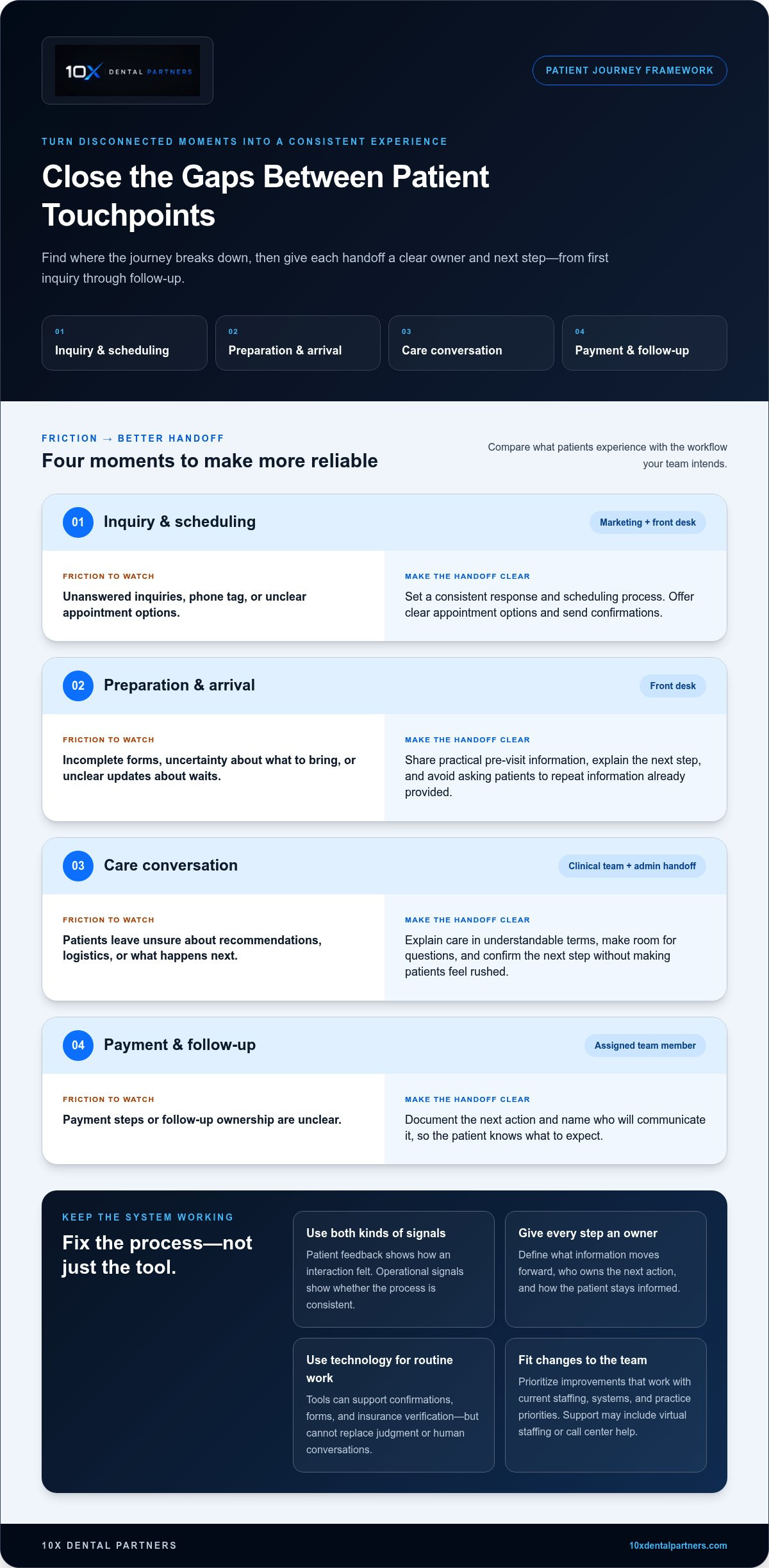
A patient inquiry rarely belongs to one department from start to finish. Marketing may shape the first expectation, the front desk handles access and preparation, the clinical team guides care conversations, and follow-up helps continue the relationship. A patient experience framework connects these steps by defining what information moves forward, who owns the next action, and how the patient is kept informed.
Technology can support repeatable tasks such as sending confirmations, collecting forms, and organizing insurance verification. It can’t replace judgment when a patient has a concern, needs an explanation, or is deciding how to proceed with recommended care. Research on modern dental patient expectations underscores the importance of communication and feeling valued. Use tools to reduce routine friction while protecting time for human conversations.
- Inquiry and scheduling: Marketing and front desk. Look for unanswered inquiries, phone tag, or unclear appointment options. Define a consistent response and scheduling process.
- Preparation and arrival: Front desk. Look for incomplete forms, uncertainty about what to bring, or unclear updates about waits. Share useful pre-visit information and explain the next step.
- Care conversation: Clinical team, with a clear administrative handoff. Watch for patients who leave unsure about recommendations or logistics. Make room for questions and confirm the patient understands what happens next.
- Payment and follow-up: Assigned team member. Friction appears when payment steps or follow-up ownership are unclear. Document the next action and who will communicate it.
Before the appointment: access, scheduling, and preparation
Prompt inquiry handling sets expectations early. Give patients clear scheduling options, send confirmations, and provide practical preparation information without adding unnecessary steps. Forms and insurance verification should help patients get ready, not create repeated requests. A consistent front-desk process with clear task ownership can reduce phone tag and uncertainty. Virtual staffing or call center support can help maintain timely, consistent communication when these tasks strain the in-house team.
During and after the visit: handoffs, treatment conversations, and follow-up
Make transitions explicit. The administrative team can prepare the patient for the clinical conversation, and the clinical team can clarify what happens afterward. Explain treatment in understandable terms, leave room for questions, and give follow-up a named owner and a defined next action. Clear conversations can support case acceptance, but the priority is helping patients understand their options without feeling rushed.
Clear next steps turn separate interactions into one coherent patient journey. Practices can strengthen handoffs through coordinated dental practice support, aligning communication tasks with the people responsible for carrying them forward.
Dental Patient Experience Myths: Software Alone Is Not the Fix
Technology can make a well-designed process easier to repeat. It can’t decide who owns a missed inquiry, clarify an inconsistent handoff, or make a sensitive conversation feel respectful. Sustainable patient experience optimization starts with the work itself: define the process, assign ownership, then use tools where they support that process.
Myth: Patient experience is mainly a technology problem.
Reality: Software can support convenience, but teams still need clear workflows and accountability. A reminder platform can send an appointment notice, but it can’t resolve who should call when a patient needs to reschedule and two team members each assume the other will follow up. Choosing a platform is a technology decision. Redesigning the work around it means defining the owner, next action, and handoff.
Myth: Faster service always means a better patient experience.
Reality: Timely responses matter, but speed without accuracy or clarity can create more confusion. A quick reply that skips a patient’s question may simply trigger another call. Team capacity and consistent handoffs help balance responsiveness with thoughtful conversation. Automation may help route routine requests or confirmations, while staff use judgment and empathy when concerns need context.
Myth: Case acceptance and patient experience are separate goals.
Reality: Clear, respectful conversations can help patients understand recommended care and make informed decisions. Listen to concerns, explain options in understandable language, and follow up as agreed. The aim isn’t to pressure every patient to accept treatment. Case acceptance is supported by the quality of the conversation and the reliability of the process around it.
These distinctions matter when choosing what to improve. If patients miss reminders, automation may address that task. If staff give different answers about next steps, prioritize a shared process and clear ownership. If conversations feel rushed, another notification tool won’t create more capacity for listening. Match the intervention to the friction instead of expecting one platform to repair every gap.
A systems-led approach connects patient communication, team capacity, and practice performance without treating any single metric as the whole story. For a related perspective on aligning operational processes and revenue priorities, explore the systems-led dental revenue optimization framework.
A Practical Dental Patient Experience Optimization Audit
A useful audit turns patient and team observations into a manageable improvement plan. This audit helps you locate friction, understand its cause, and review changes without imposing targets that may not fit your practice. Start with a baseline, then compare like with like.
- 1. Map the touchpoints. Follow the journey from first inquiry through scheduling, arrival, care conversations, payment, and follow-up. Note the intended owner and next step at each handoff.
- 2. Gather signals. Review patient feedback, missed-call patterns, scheduling delays, cancellations, repeat questions, and follow-up completion. Ask team members where work regularly stalls or patients seem uncertain.
- 3. Define the measures. Track indicators such as response time, abandoned inquiries, appointment access, cancellations, and completed follow-up. Record exactly how each is counted so future comparisons are meaningful. Pair operational data with patient feedback to understand both what happened and how it felt.
- 4. Identify the cause and prioritize. Rank friction by patient impact, frequency, operational cause, and practical ability to address it. A recurring delay caused by unclear ownership needs a different fix from one caused by limited team capacity.
- 5. Test and review. Choose one manageable workflow improvement, name an owner, and set a review date. Compare results with the baseline, gather team and patient observations, and decide whether to refine the process or address another friction point.
Which patient experience measures should a dental practice review?
Choose measures that connect to the journey you mapped. Review how quickly inquiries receive a response, whether calls are abandoned, how easily patients access appointments, and whether planned follow-up is completed. Define the time period and counting method before comparing results. Pair these indicators with feedback so a faster response isn’t mistaken for a better experience if patients still don’t know what happens next.
How to prioritize improvements without overwhelming the team
Keep the first change focused. If a handoff involves the front desk, clinical team, and management, clarify each person’s responsibility rather than assigning the whole problem to one role. If front-desk capacity is part of the diagnosis, use this practical guide to dental front desk outsourcing to consider how staffing support may fit. Leaders can also connect operational observations with broader business review using the dental practice profitability analysis checklist.
To turn audit findings into an operational plan, explore dental growth consulting and operational support.
Build a More Consistent Patient Experience with the Right Operating Support
The right next step depends on the friction your audit uncovered, not on a predetermined tool or service. A practice dealing with inconsistent appointment communication may need clearer task ownership; a team stretched by routine scheduling work may need additional capacity. Start with the cause, then choose support that fits the workflow and reinforces it.
10X Dental Partners combines consulting, virtual staffing, and call center support to help practices improve operations and grow. 10X Remote Assist supports scheduling, patient communication, and insurance verification workflows, while call center services help reinforce consistent communication. These services work best when they fit into a defined process, with clear responsibility for what happens next.
When operational support can complement patient engagement software
Existing systems can organize reminders, forms, and requests. Trained people can help manage the communication and scheduling tasks around them, including recognizing when a patient needs a personal response rather than an automated message. Distributed work still needs clear ownership: define who handles routine requests, where unresolved issues go, and when they should be escalated to the appropriate team member. Virtual support should complement the practice’s processes, not replace clinical care or judgment.
If administrative capacity is the friction point, explore this guide to virtual staffing for dental offices to consider how support could fit alongside your existing team and systems.
Patient conversations also deserve intentional support. The Closing Experts helps practices strengthen conversations around recommended care and case acceptance. The goal is clear, respectful communication that helps patients understand their options, not pressure or a promised outcome.
Turn the audit into a focused next step
Translate your findings into a concise operating brief before changing tools or assigning more work. Align marketing, front-office, and clinical handoffs around the same patient journey so each team understands what it owns and what it passes forward.
- Priority friction: Name the specific issue patients or staff encounter.
- Responsible owner: Assign a person or team accountable for the handoff.
- First improvement: Choose one practical workflow change that addresses the cause.
- Review measure: Select a consistent indicator and set a date to assess what changed.
This focused approach keeps patient experience optimization grounded in practice priorities and team capacity. Explore operational growth support with 10X Dental Partners to align consulting, staffing, and communication support with the friction your audit identified.
Make the Next Improvement Count
A more consistent patient journey starts with a clear view of where communication, scheduling, or handoffs break down. Map the friction, establish a baseline, and choose one practical improvement with a named owner and a review measure. That disciplined approach makes patient experience optimization part of everyday operations, not another disconnected initiative.
The right support depends on the gap. 10X Remote Assist supports scheduling, patient communication, and insurance verification workflows. Call center services and The Closing Experts support patient experience and case acceptance through consistent communication and patient conversations. These services complement a practice’s operating processes, while clear ownership and thoughtful team interaction remain essential.
Ready to align your systems and team around a more coherent patient journey? Explore operational growth support with 10X Dental Partners. Start with one friction point, build a process your team can repeat, and refine it based on what patients and staff experience.
Frequently Asked Questions
What does patient experience optimization mean in dentistry?
Patient experience optimization is the structured work of improving how patients experience each interaction with a dental practice, from first inquiry through follow-up. It includes access, communication, forms, appointment flow, treatment conversations, and clear next steps. Rather than relying on a one-time campaign or software purchase, the practice identifies friction, assigns ownership, makes practical changes, and reviews patient feedback alongside operational signals.
How can a dental practice improve patient experience?
Start by mapping the patient journey and identifying where delays, repeated questions, missed handoffs, or unclear instructions occur. Use patient feedback and team observations to understand why those problems happen, then prioritize one manageable improvement. For example, clarify who follows up on an unanswered inquiry. Assign an owner, decide how to review the change, and keep clinical judgment and respectful communication central throughout the process.
Can dental software improve the patient experience?
Yes. Software can make tasks such as scheduling, forms, reminders, and communication more convenient. Its value depends on how well it fits the practice workflow and whether the team knows who owns each step. A new tool won’t automatically resolve unclear processes, limited capacity, or inconsistent explanations. Identify the operating need first, then assess which features support the workflow rather than adding disconnected tasks.
What should a dental practice measure to evaluate patient experience?
Review indicators such as inquiry response time, missed calls, appointment access, cancellations, follow-up completion, and patient feedback. Define each measure consistently, including how it’s counted and the period being reviewed, before comparing results over time. Don’t rely on one number alone. Operational data can show where friction occurs, while patient comments help explain whether the interaction felt clear, timely, and respectful.
How does patient experience affect dental case acceptance?
Clear, respectful conversations can help patients understand recommended care, available options, and what happens next. Reliable follow-up and well-managed handoffs can also prevent confusion from disrupting a treatment discussion. Case acceptance shouldn’t be treated as pressure or as a goal every patient must meet. Review communication quality and patient understanding alongside operational measures to support informed decisions and consistent conversations.
Is outsourcing dental front-desk work right for every practice?
No. The fit depends on which tasks create friction, team capacity, communication needs, and existing workflows. Remote support may help with defined administrative activities such as scheduling, patient communication, or insurance verification. 10X Remote Assist supports these workflows. Before distributing work, establish task ownership, escalation paths, and handoff expectations so support aligns with the practice’s patient journey.
How do you improve patient communication without overwhelming the team?
First, identify which messages need timely responses, which tasks can follow a consistent process, and which conversations need personal attention. Clarify ownership and remove duplicate steps where possible. Use reminders or communication tools to support routine work, not replace judgment. After a change, review team workload and patient feedback together. Refine the workflow based on what’s happening instead of layering on disconnected tasks.


